
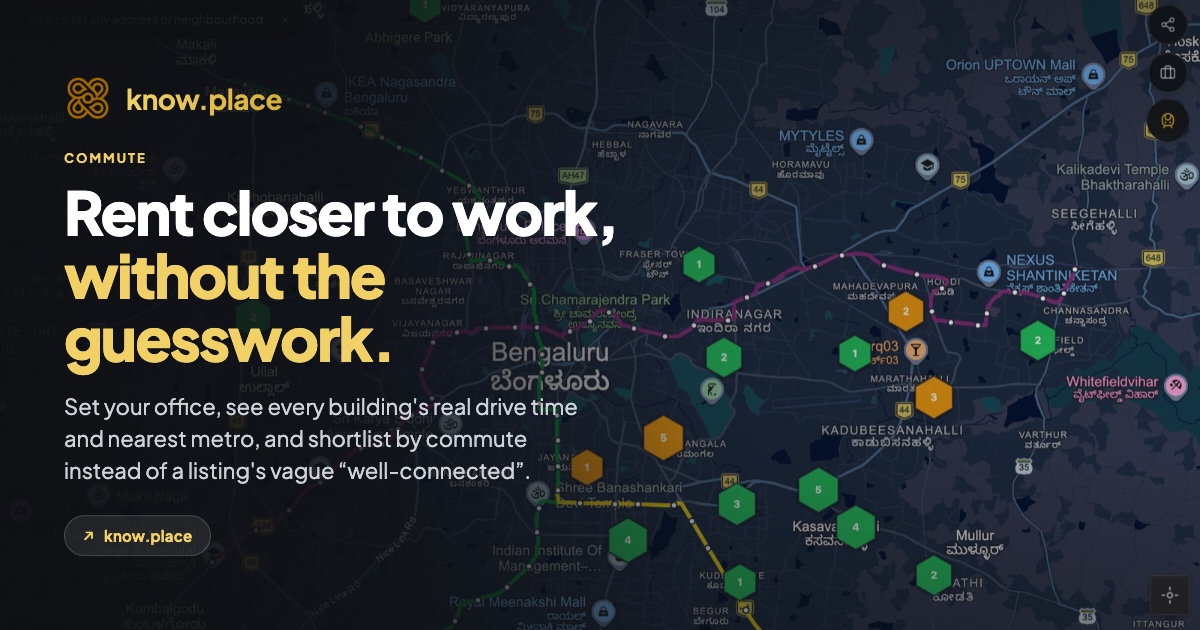
The single biggest thing a rental listing hides from you is the part of the day you’ll hate the most: the commute. A flat can be bright, well-priced, and freshly painted, and still cost you two hours a day stuck on an arterial road that only locals know to avoid.
know.place is a map first, so commute is something you can actually reason about before you sign, instead of discovering it in week one. This post walks through the three features that matter for that: setting your workplace, reading travel time on each building, and turning on metro lines to see what’s genuinely close to transit.
The screenshots below zoom into one city because that’s where the dataset is densest right now, but every one of these features works the same way over any Indian city, Mumbai, Delhi, Hyderabad, Pune, Chennai, or wherever you’re moving.
Step 1: Tell know.place where you work
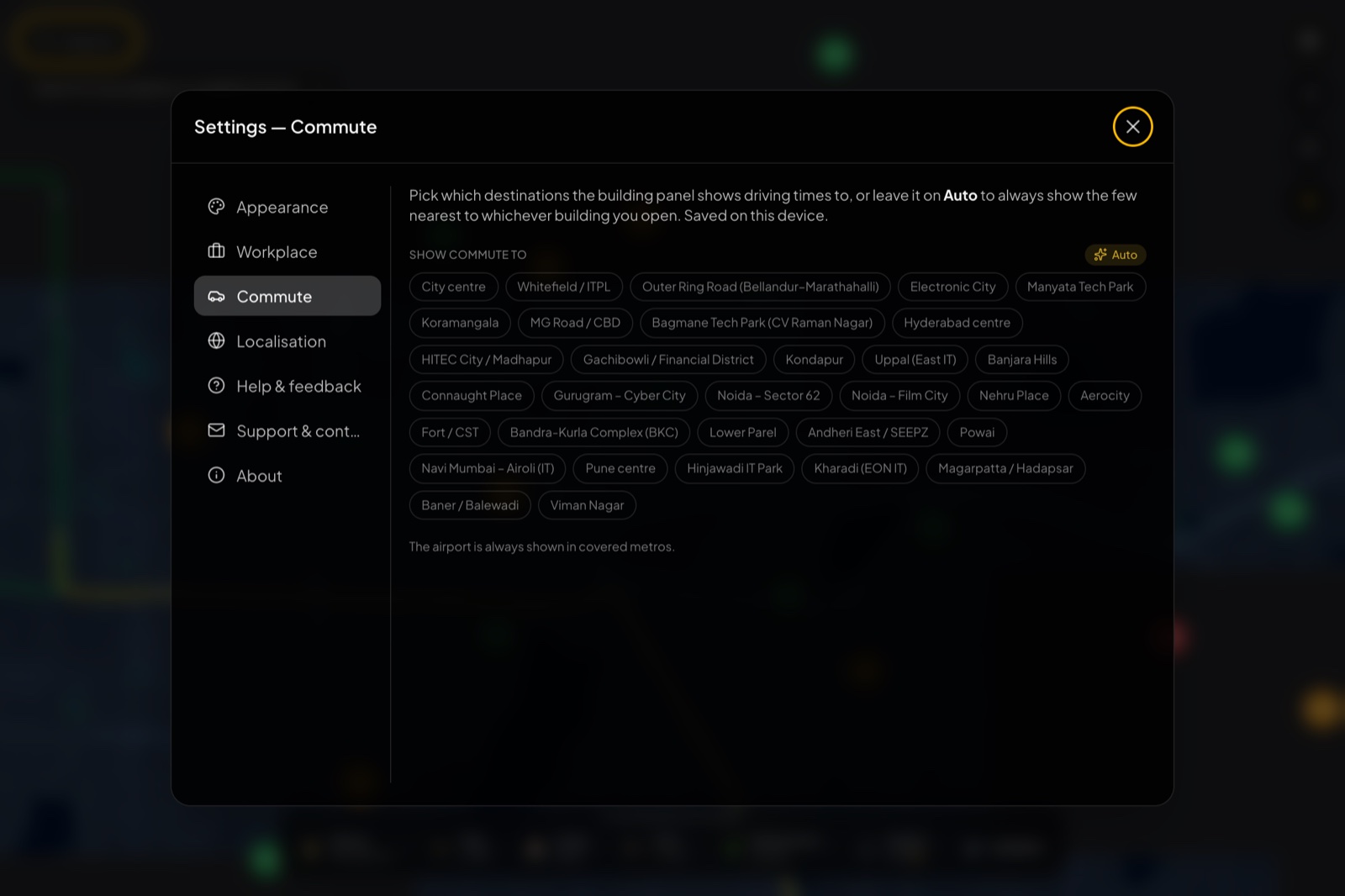
Open know.place, then open the settings rail on the top right. There’s a commute section where you set your workplace once.
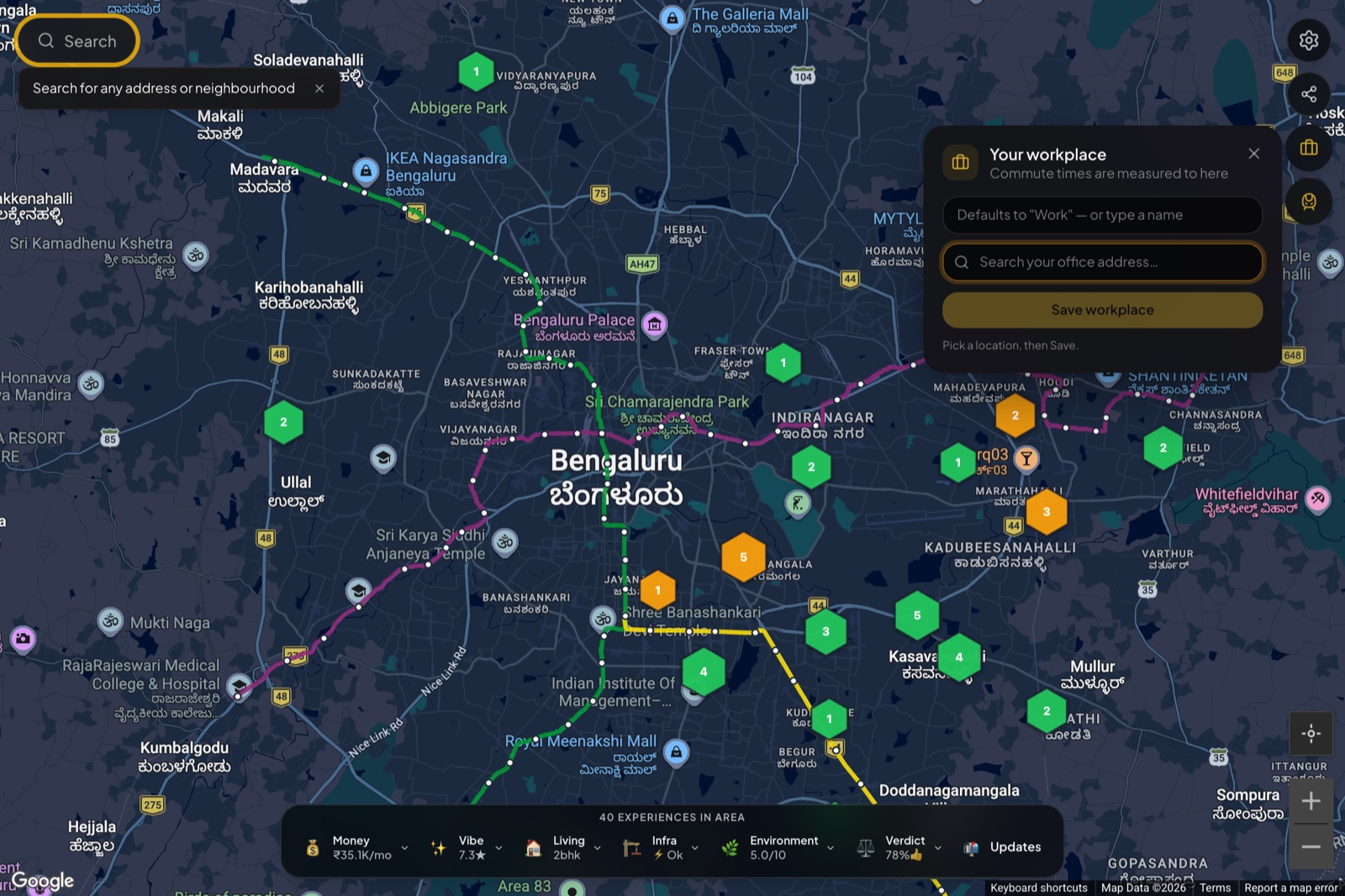
You can search for your office by name or address, or drop a pin directly on the map. know.place remembers it, so you only do this once per session. Your workplace is a private setting on your own screen. It never becomes part of a review and it isn’t shared with anyone.
Once it’s set, you’ll see your workplace marked on the map.
Step 2: Read the commute on every building
Now the map starts working for you. Click any building hexagon and its panel includes a commute readout: how far that building is from your workplace, and a rough travel estimate to get there.
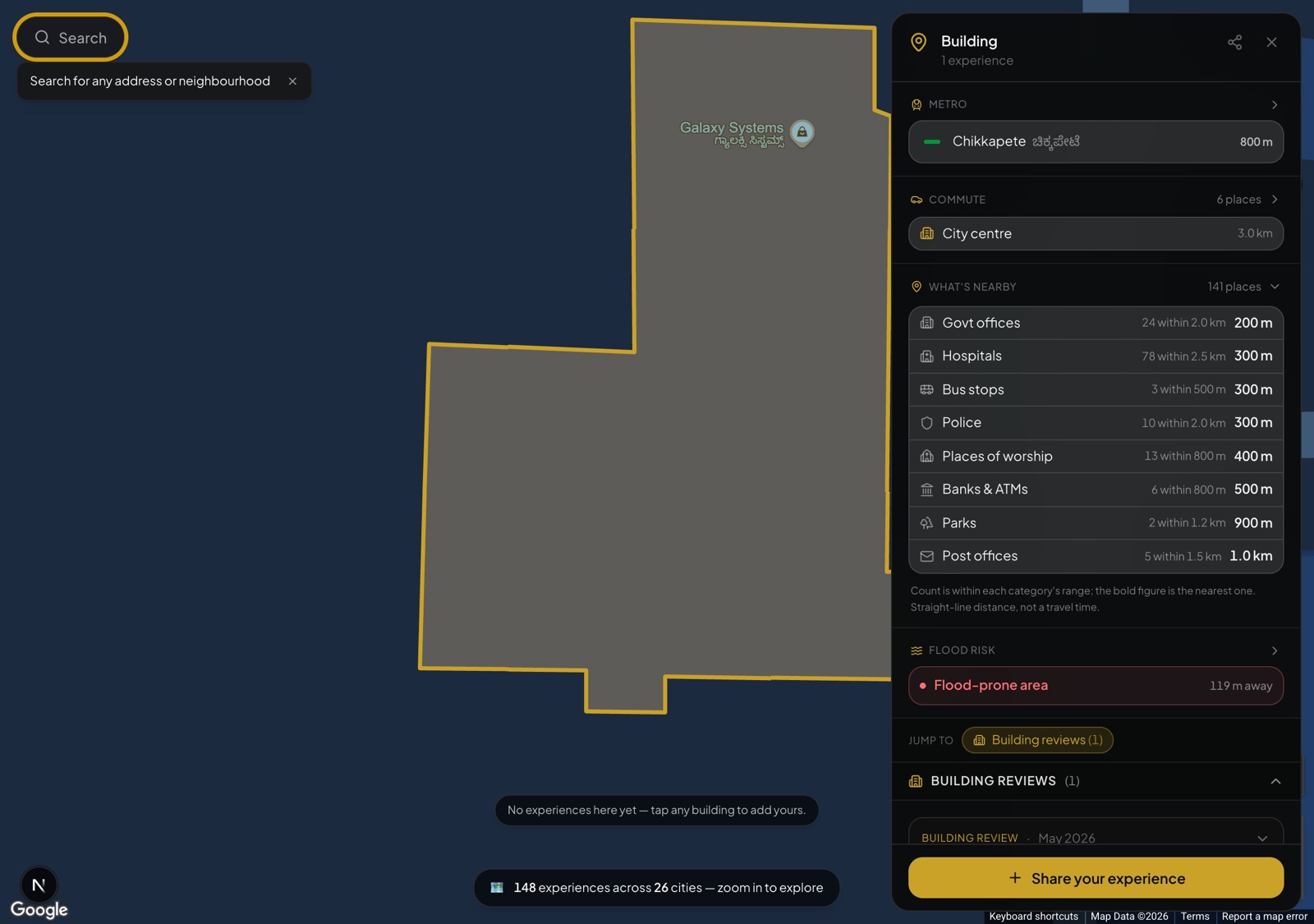
This is the comparison most listing sites can’t give you. Two flats at the same rent, in two different pockets, can have wildly different commutes to the same office. With your workplace set, you can click through your shortlist and rank them on the number that actually decides your quality of life, not just the one on the rent card.
A practical way to use it: shortlist five buildings from the dock and the map, click each one, and note the commute figure next to the rent. You’ll often find the slightly pricier flat is the cheaper one once you price in 90 minutes a day of your own time.
Step 3: See the metro and transit lines
Rent close to a metro station and your commute stops depending on traffic. know.place can draw metro lines and stations over the map through the insights layer, so you can see which buildings sit within walking distance of a station and which ones need a feeder ride before you even reach the metro.
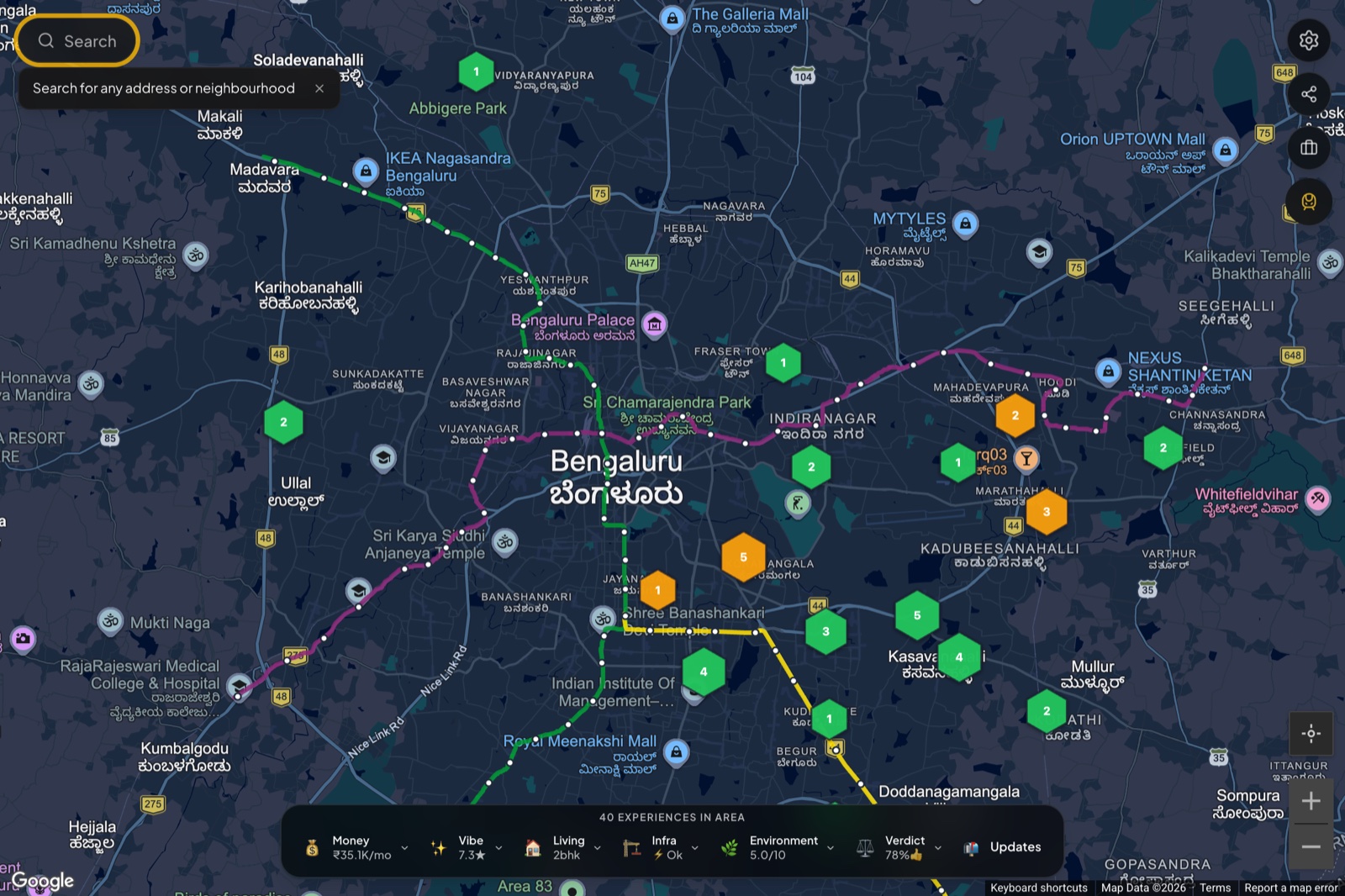
Turn it on from the settings rail. With the lines visible, a pocket that looked “well connected” on a listing can reveal itself as a 20-minute auto ride from the nearest station, and a quieter area you’d dismissed can turn out to sit right on a line. When the layer is on, the data sources and their last-updated dates are shown, so you know exactly what you’re looking at.
Putting it together
Here’s the whole commute workflow, start to finish:
- Set your workplace once, in settings, by search or by dropping a pin.
- Turn on metro lines from the insights layer so you can see transit at a glance.
- Click your shortlisted buildings and read the commute figure on each panel.
- Rank by commute, not just rent. The cheapest flat is rarely the cheapest once you count the hours.
- Read the reviews for the buildings that survive, because the people who lived there will often mention the real-world commute, the shortcut road, the lane that floods, the bus that never comes.
That last point is the quiet advantage of a review-first map. The travel estimate gives you the theory. The experiences people have added give you the practice: which exits are a nightmare at 9am, which “10-minute walk to the metro” is actually 25 in the heat. Both live in the same place.
One ask
If you commute in India and you’ve found a building that’s genuinely well placed, or a trap that looks well placed and isn’t, add your experience. Mention the commute honestly. It’s the field the next person moving to your city will be most grateful for.
Keep reading
- How to use know.place: the full walkthrough, including setting your workplace.
- Vet a building before you sign: the due-diligence checklist once the commute checks out.
- Moving to a new city: the relocation playbook if you’re starting from scratch.
- Introducing know.place: what it is and why we built it.