
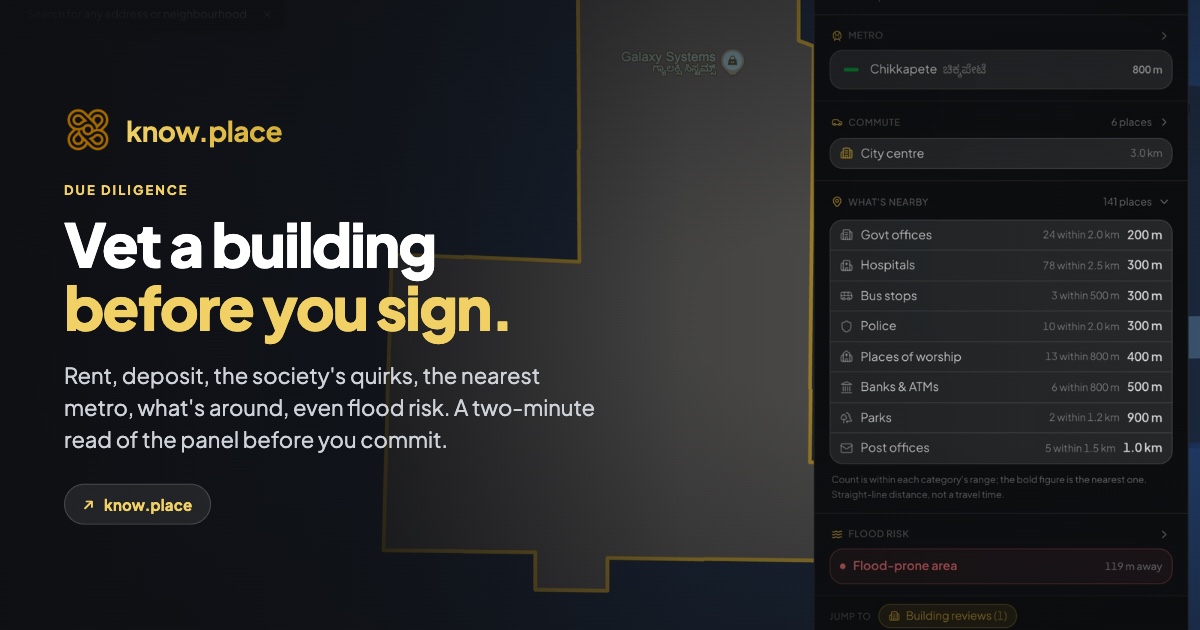
A rental deposit in India is often two to ten months of rent, handed over to someone you’ve met once, for a place you’ve seen for twenty minutes. It is one of the largest informal financial commitments most people make, and it’s almost always made on the thinnest possible information.
know.place exists to thicken that information. Before you sign, you can run the building through a short due-diligence pass and replace “it seemed fine” with actual data from people who lived there. Here’s the checklist we’d use.
The screenshots zoom into one city because that’s where reviews are densest today, but the checklist works over any building in any Indian city.
1. Open the building panel and read the whole picture
Find the building on the map and click its hexagon. The panel that opens is the single most useful screen for vetting a place: rent, vibe, configuration, infrastructure, and the verdict, all from real tenants.
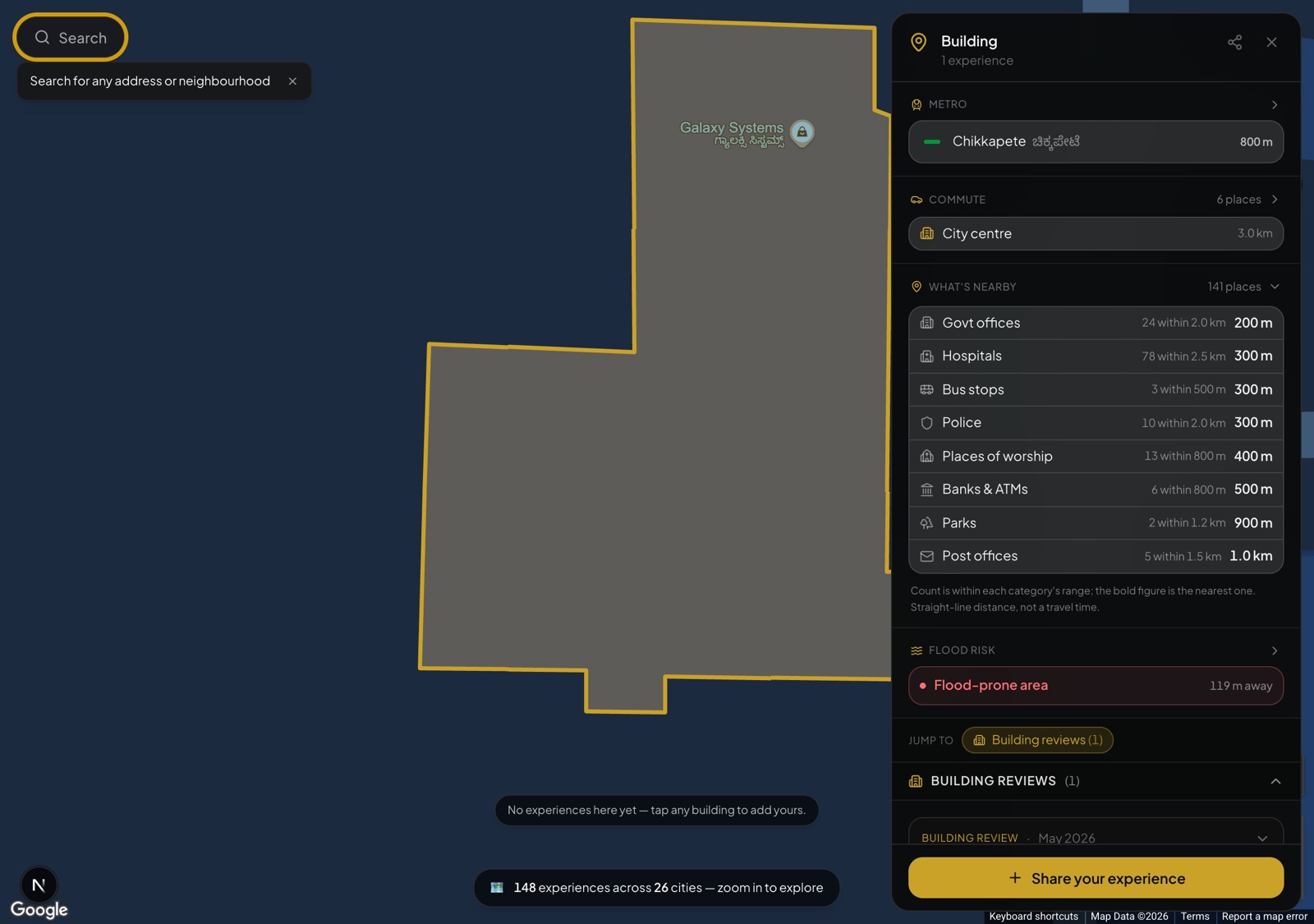
Don’t just look at the headline star. Read the individual experiences. The number tells you the average; the written reviews tell you why, and the why is what you’re actually buying.
2. Split the flat from the society
This is the step most people skip and later regret. know.place scopes reviews into two buckets:
- Flat reviews are about the specific unit: the rent paid, whether parking really cost extra, the water and power reality inside the home, whether the tenant would renew.
- Building reviews are about the society around it: gating, security, lift uptime, maintenance, the RWA, the neighbours.
A beautiful flat in a dysfunctional society is a bad rental. A plain flat in a well-run building is often a great one. Reading the two separately stops a fresh coat of paint from hiding a lift that’s been “under repair” for a year.
3. Check the deposit and the real rent
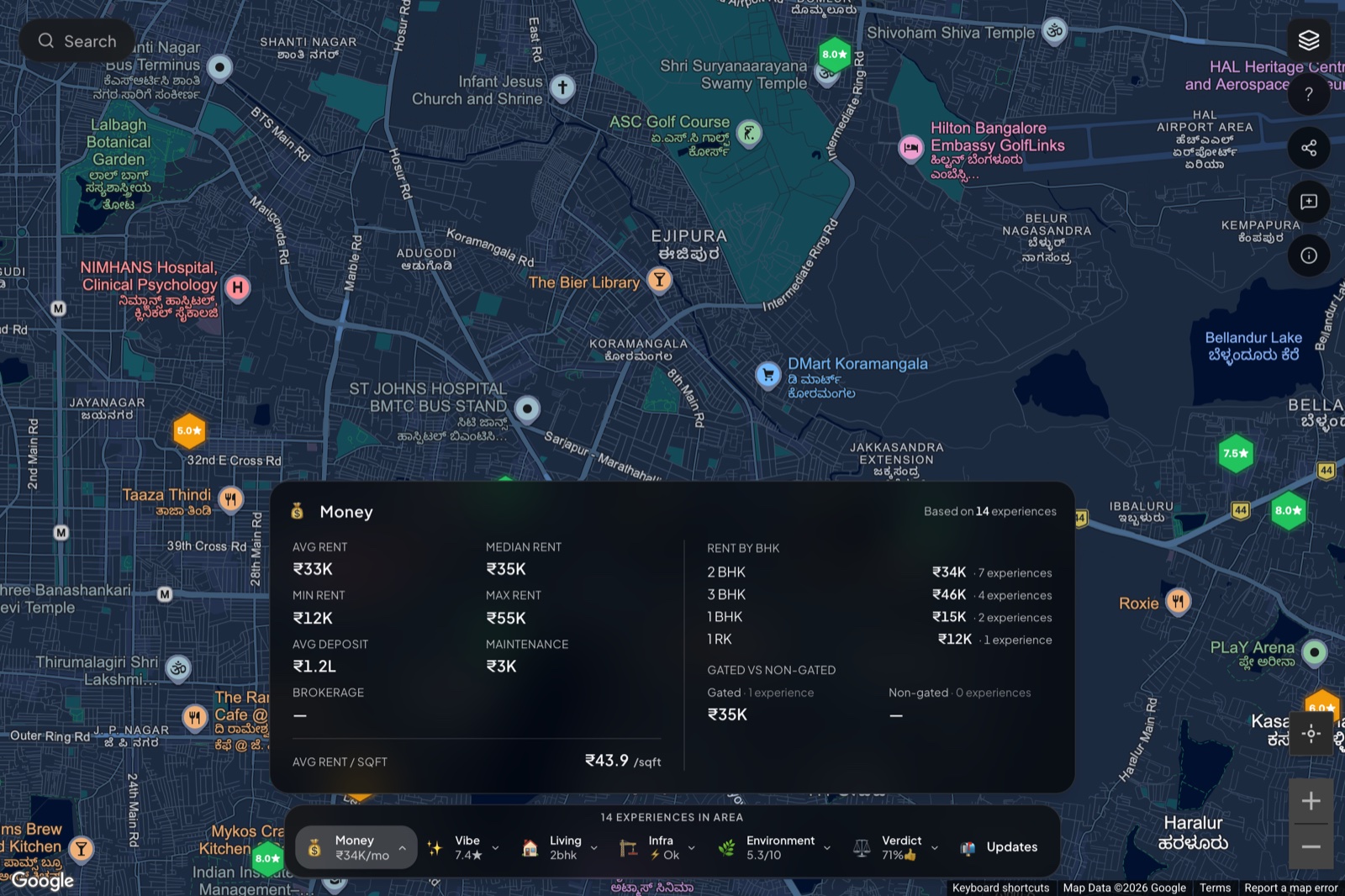
Listings quote rent. They rarely quote the deposit honestly, and “all-inclusive” usually isn’t. know.place captures the actual deposit and the real monthly figure people paid, including whether parking and maintenance were extra.
Use the area dock to sanity-check the building against its neighbourhood. If one building’s deposit is wildly above the area median for the same configuration, that’s a question to ask, not a number to accept.
4. Check flood risk and the environment
In far too many Indian cities, the difference between a fine monsoon and a ruined one is a few hundred metres. know.place’s insights layer can show flood and water-related civic data, so you can see whether a building sits in a pocket with a history of waterlogging before you sign, not after.
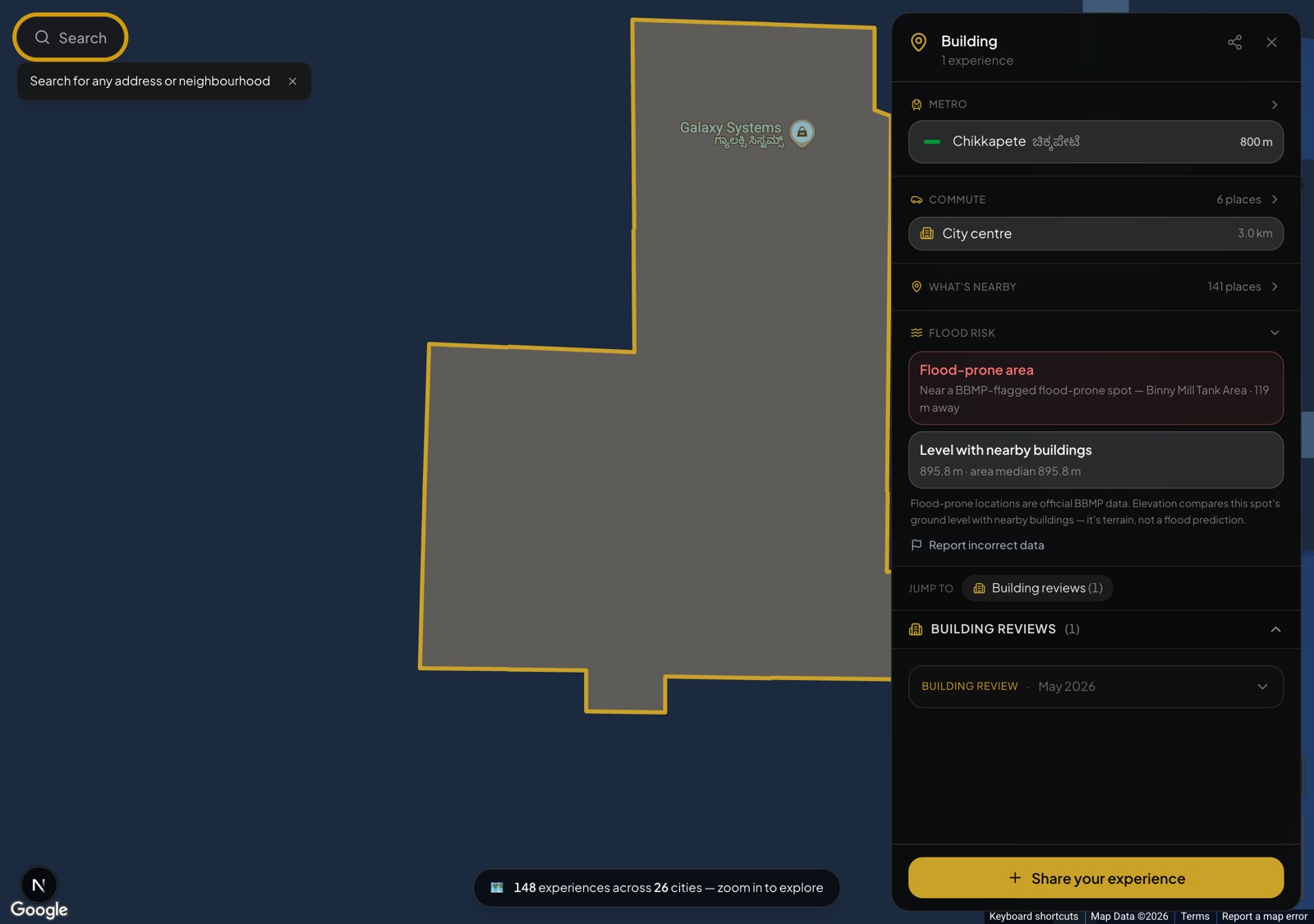
Turn the layer on from the settings rail. When it’s on, the sources and last-updated dates are shown, so you can judge how much to trust each signal. Combine it with what reviewers wrote: the civic data tells you the area’s history, the reviews tell you what actually happened to the people on that street.
5. Weigh the verdict
The single most predictive field on know.place is “would you rent here again”. It compresses everything a reviewer felt into one honest answer. A building where most past tenants would renew is telling you something a brochure never will. A building they’d flee from is telling you even louder.
Look at the verdict, then read the recent experiences behind it. Newer reviews carry more weight: management changes, lifts break, a good society can slip and a rough one can turn around.
6. When you sign, close the loop
Due diligence is a two-way street. The reason you can vet a building today is that someone before you took a few minutes to write down what living there was really like.
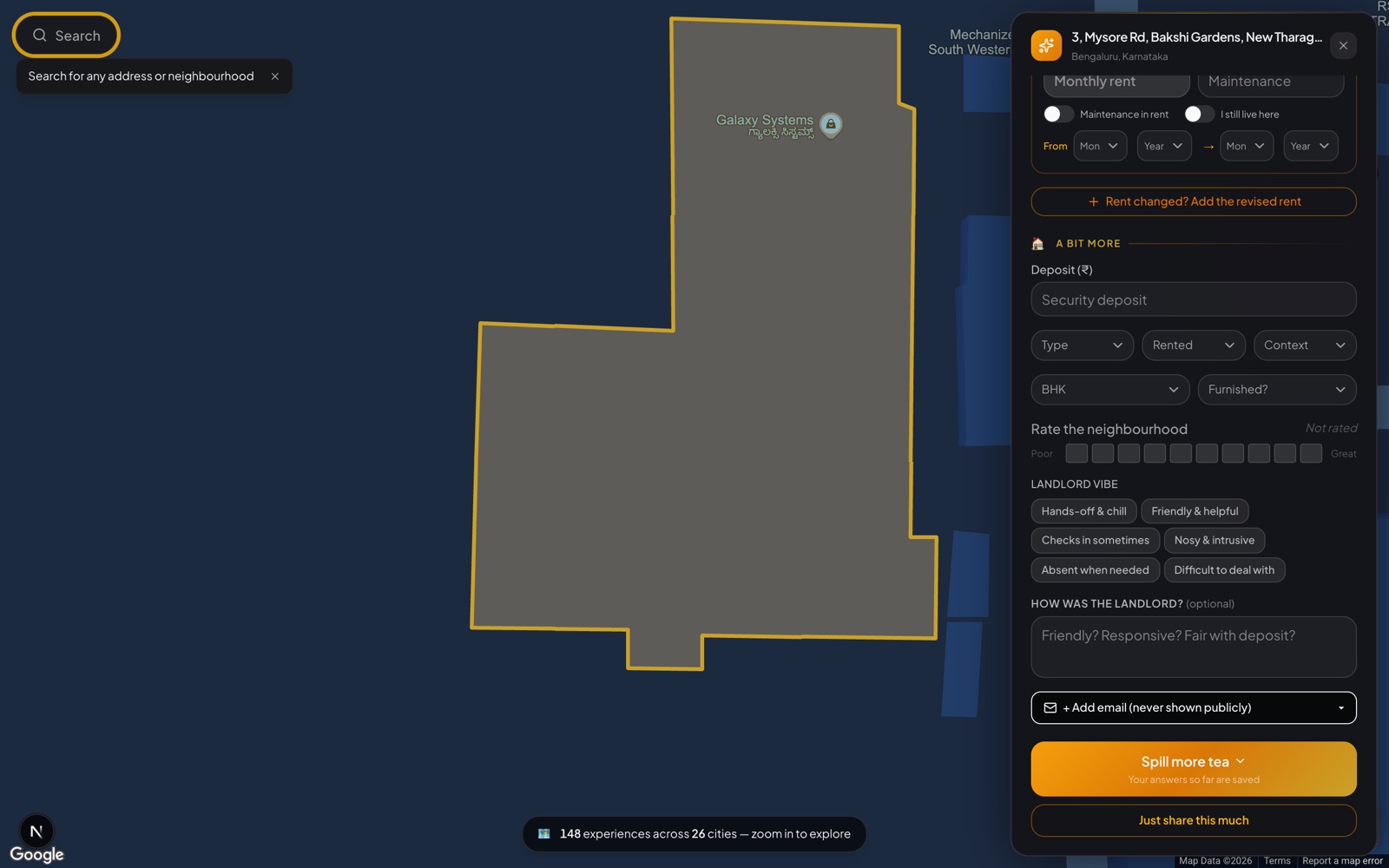
When you sign your next lease, or when you move out, add your experience. Almost every field is optional, so share what you’re comfortable with. Even a partial review (rent, deposit, would-you-rent-again) saves the next person the exact uncertainty you just worked through.
The checklist, in one place
- Open the building panel and read the actual experiences, not just the star.
- Read flat reviews and building reviews separately.
- Check the real deposit and rent, and compare against the area median in the dock.
- Turn on the insights layer and check flood and environment signals.
- Weigh the would-rent-again verdict, and trust recent reviews most.
- After you sign, add your own experience so the next person can do the same.
Keep reading
- How to use know.place: the full walkthrough of every panel and flow.
- Rent closer to work: fold commute into your due-diligence pass.
- Honest reviews beat listing hype: why the reviews you’re reading can be trusted.
- Introducing know.place: what it is and why we built it.